Category: Uncategorized

  • Disenfranchised Grief

    Disenfranchised Grief

    Disenfranchised grief is not acknowledged, supported, or socially validated. It can occur when a person experiences a significant loss, but others minimize it, judge it, or view it as less legitimate. As a result, the grieving person may feel isolated, misunderstood, or unable to openly mourn. Examples include losses that society considers “less serious” (such as the death of an elderly parent, an ex-partner, a pet, or a miscarriage), or situations where the mourner’s relationship to the deceased is not recognized, as in same-sex relationships.

    The death of an elderly parent often impacts older adult children. Even expected losses can carry significant emotional weight. Society often minimizes this grief, viewing it as a natural event. Adult children may face psychological shifts, confront their own aging, and reassess priorities and relationships. Loss can alter family dynamics, leading to feelings of responsibility for traditions and cohesion. When older adults witness their parents’ gradual decline before death, intense feelings of sadness, loneliness, and disorientation often arise, sometimes mixed with relief from caregiving burdens, leading to guilt. Grief affects identity, as losing a parent can feel like losing a central anchor. Despite these struggles, some individuals find opportunities for personal growth and meaning, though this requires social validation and support, which may be insufficient.

    Bethany Morgan Brett notes that societal attitudes toward grief vary based on the age of the deceased. After the death of an older person, people often use clichés like “they had a long life” to suggest a sense of closure due to the “timeliness” of the death. The death of an older parent is seen as a normative life event, which can lead to the grief experienced being minimized or overlooked. This reflects a hierarchical view of grief, where the loss of a child is generally perceived as more tragic than the loss of an elderly parent. Such views can hinder the acknowledgment and processing of deeper emotions associated with the loss.

    The excellent grief support website, “What’s Your Grief,” suggests that it’s important to recognize that when comforting someone whose parent has died, you can’t “fix” their situation. Instead of trying to console them, focus on acknowledging their pain, being present with them, remembering their loved one, and showing support both in the immediate aftermath and over the long term. One way to talk about a parent’s death is to say, “Please tell me about your parent”, which opens a more personal conversation, allowing the bereaved to share their thoughts and feelings. Check out their article, “What to say to someone whose mother died or father died”, linked below.

    Writing a letter to the departed may help the bereaved express feelings about loss. Expressive writing is an approach to loss that supports healing. Sitting down to write this letter to a loved one begins by letting go of any concerns about spelling or grammar, word choice (curse words are allowed!), or worries about anyone reading or critiquing the document. One can simply start writing and not stop until it feels complete. A second step could be to read the letter and transfer significant passages to another document, such as a journal. This process can be included in psychotherapy when an empathetic and grief-informed professional provides caring treatment for loss.

    References

    What’s Your Grief. (2021, March 26). What to say to someone whose mother died or father died. https://whatsyourgrief.com/what-to-say-to-somone-whose-mother-died-or-father-died/

    Morgan Brett, B. (2023). The loss of parents in later life. In The Child–Parent Caregiving Relationship in Later Life: Psychosocial Experiences (pp. 97–111). Policy Press. https://doi.org/10.46692/9781447319702.007

  • Healing Reads

    Healing Reads

    Books

    Surviving and Thriving in Stepfamily Relationships

    by Patricia L. Papernow
    This book draws on current research, a wide variety of clinical modalities, and thirty years of clinical work with stepfamily members to describe the special challenges stepfamilies face. The book presents the concept of “stepfamily architecture” and the five challenges it creates, and delineates three different levels of strategies―psychoeducation, building interpersonal skills, and intrapsychic work―for meeting those challenges in dozens of different settings.

    Estrogen Matters: Why Taking Hormones in Menopause Can Improve Women’s Well-Being and Lengthen Their Lives — Without Raising the Risk of Breast Cancer

    by Avrum Bluming & Carol Tavist
    A compelling defense of hormone replacement therapy, exposing the faulty science behind its fall from prominence and empowering women to make informed decisions about their health. A sobering and revelatory read, Estrogen Matters sets the record straight on this beneficial treatment and provides an empowering path to wellness for women everywhere.

    I Don’t Want to Talk About It: Overcoming the Secret Legacy of Male Depression

    by Terrence Real
    The author writes that “depression is a silent epidemic in men; that men hide their condition from family, friends, and themselves to avoid the stigma of depression’s ‘un-manliness.’” Problems that we think of as typically male; difficulty with intimacy, workaholism, alcoholism, abusive behavior, and rage-are really attempts to escape depression. And these escape attempts only hurt the people men love and pass their condition on to their children.This ground breaking book is the “pathway out of darkness” that these men and their families seek. Real reveals how men can unearth their pain, heal themselves, restore relationships, and break the legacy of abuse. 

    Scream Free Parenting: 10th Anniversary Revised Edition: How to Raise Amazing Adults by Learning to Pause More and React Less

    by Hal Edward Runkel
    “You can have the structured, rewarding home life you’ve always craved, with respectful kids who are responsible for their own actions. All you have to do is learn to pause, so you can respond more and react less. It really is that simple. Once you learn to control your own emotions and behavior, your children will soon learn how to control theirs.”

    Fuel Your Brain, Not Your Anxiety: Stop the Cycle of Worry, Fatigue, and Sugar Cravings with Simple Protein-Rich Foods
    by Kristen Allott & Natasha Duarte
    Discover how high-protein, brain-fueling foods can help overcome anxiety, worry, and fatigue. It is common to struggle with anxiety, sugar cravings, weight gain, and fatigue. This practical, feel-better-now workbook offers ways to make healthier food choices and discover how protein and sugar affect emotions and energy.
    Convenient meal planning and tracking tools help monitor progress, and a wealth of easy tips and doable ways to improve diet, overcome fatigue, and restore vitality and mental clarity.


    No Time Like the Present: Finding Freedom, Love, and Joy Right Where You Are
    by Jack Kornfield
    The author offers wisdom through warmhearted, poignant, and
    often funny stories that provide keys for opening gateways to immediate shifts in perspective and clarity of vision, allowing us to grapple with difficult emotions and learn how to change course, take action, or—when we shouldn’t act—relax and trust. Each chapter presents a path to a different kind of freedom—freedom from fear, freedom to start over, to love, to be yourself, and to be happy—and guides you into an active process that engages your mind and heart, awakens your spirit, and brings real joy, over and over again.


    When Things Fall Apart: Heart Advice for Difficult Times
    by Pema Chödrön
    Drawn from traditional Buddhist wisdom, this book offers radical and compassionate advice for what to do when things fall apart
    by going against the grain of our usual habits and expectations.
    The self-described “example of ordinary neurosis,” the beloved American Buddhist nun offers practical and achievable practices.


    Self Help: This Is Your Chance to Change Your Life
    by Gabrielle Bernstein,Foreword byRichard C. Schwartz
    Bernstein demystifies the power of Internal Family Systems (IFS) Therapy, bringing its life-changing teachings into everyday life.
    Discover how extreme patterns like addiction, rage, pleasing, or constant self-judgment often develop as ways to suppress old feelings of inadequacy, shame, or fear. Once these patterns
    are brought into the light and cared for, healing happens swiftly.
    An enjoyable read and excellent companion book for those in IFS therapy.

    Podcasts

    Tara Brach
    Tara Brach, Ph.D is an internationally known meditation teacher and author of bestselling books Radical Acceptance, True Refuge
    and Radical Compassion. Tara shares a weekly guided meditation and talk that address the value of mindfulness meditation and self-compassion in relieving emotional suffering, serving spiritual awakening and bringing healing to our world.


    Being Well
    Conversations focus on the key insights from psychology, science, and contemplative practice that you need to build reliable inner strengths, overcome your challenges, and get the most out of life. A world-class group of experts explore the practical science of lasting well-being.

    You Are Not Broken
    Empowering women (and the partners who love them) to live their best lives. Combining the power of mind-work, body science, and relationships, Kelly Casperson, MD, “joyously breaks down the societal barriers that are keeping us from living our best intimate lives. Whether you are young or past menopause, single or in a long-term relationship, it is never too late or too early to realize YOU ARE NOT BROKEN.”

  • Put it down and go outside

    Put it down and go outside

    If you are like me and many other people and have a neurodivergent person in your life, you know the joys and challenges in this relationship. My personal and professional curiosity recently led me to a webinar on non-medication interventions for ADHD. 

    The webinar was aimed at neurodivergent folks, people who love them, and clinicians working with them. The presenter was David Nowell, PhD, who provided loads of helpful information.

    In the process, I became more aware of the disruptive influence of always having our phones nearby. I turned off notifications for many apps on my phone. I can always check, but I don’t have to be continually interrupted throughout the day. I feel a sense of peace that I didn’t realize I was missing. I hope this is helpful to you, too.

    Check out these tips for improving self-regulation by reducing screen time that can be useful for neurotypical and neurodivergent folks alike:

    1. Limit the amount of screen time and schedule social media use.
    2. Seek out “Green Time” by being outside. This is not the same as exercise.
    3. Notice when you reach for your device.
    4. Remove apps from your device that you don’t need. Go to the website instead.
    5. Move icons off your home page. One extra swipe can offer the opportunity to refrain.
    6. Turn off notifications on all but critical apps
    7. Consider a technology fast, which can change habitual use. 

    Thanks for reading,

    Leilani

  • Mother’s Day Thoughts

    Mother’s Day Thoughts

    To all mothers and mothers in spirit, thank you for the love you’ve given and the efforts you’ve made for those you love.

    This day can be difficult for those of us who have lost mothers and children. Loss comes in many forms, including death, at different times in our lives.

    I recently started writing letters to some people who have passed, or are no longer in touch. It is a way to address any ambivalence or regrets and eventually release those feelings and thoughts. It can be an opportunity to seek a new inner relationship with a loved one, which helps us find renewal in our relationships with others and the outer world.

    My favorite grief site, What’s Your Grief, offers support and reflection for those who are feeling loss today.

    Thanks for reading,
    Leilani

  • Great Care Begins with Self Care

    Great Care Begins with Self Care

    Caring for family members presents many opportunities to serve, to love, and to grow from the difficulties inherent in the process. Dealing with difficult family members, especially when a legacy of trauma is present, can be one of the greatest challenges of our lives. Learning to give ourselves the love and kindness we don’t hesitate to give others is critical. This is a helpful article on the subject of difficult parent care from WebMd.
  • Broken to Pieces

    Broken to Pieces

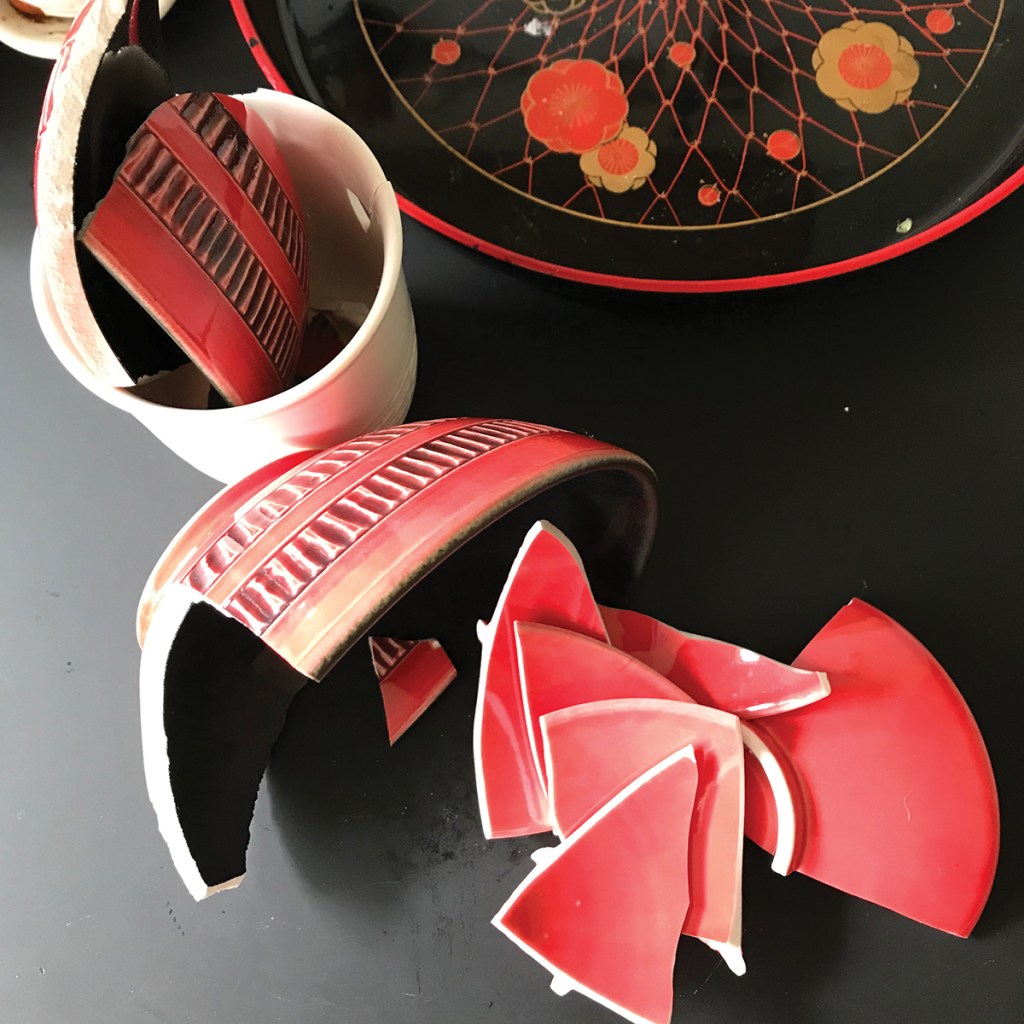
    Learning from loss is possible with the right attitude. I contemplated this when I knocked a set of handmade bowls to the countertop, breaking them into pieces. The sting of tears came quickly. I had purchased them as a gift for my mother, who died recently. 

    Just like for so many others, the losses in my life over the last several years have been stacking up. I have been seeking a path to accept all of it; the ups and downs of everyday life.

    Thich Nhat Hahn, beloved teacher, Buddhist monk, and activist wrote, “Most people are afraid of suffering. But suffering is a kind of mud to help the lotus flower of happiness grow. There can be no lotus flower without the mud.”

    Standing in the mud, I breathe, raise my eyes to the sky, and I know that I am free. The trick is to keep breathing.

    Photo: Leilani Norman

  • West Coast Whitewash

    West Coast Whitewash

    “West Coast Whitewash”, 36″ x 24″ x 1.75″, acrylic on canvas

    Among some folks of West Coast cities there exists a notion that they “don’t see color”. I’m somewhat colorful myself and I find that concept rather offensive. Why not be curious about difference, rather than ignore them?  I encourage all of us to engage in conversation with people who are different from ourselves.

    This painting was inspired by skin color tones. I overlaid the stripes of color with a grid, which suggest artificial social conventions. The next step was to cover certain sections of the canvas with many layers of transparent white paint.

    West Coast Whitewash, work in progress
    Work in progress, second phase
    Work in progress, phase three
    West Coast Whitewash, detail 1
    West Coast Whitewash, detail 2